
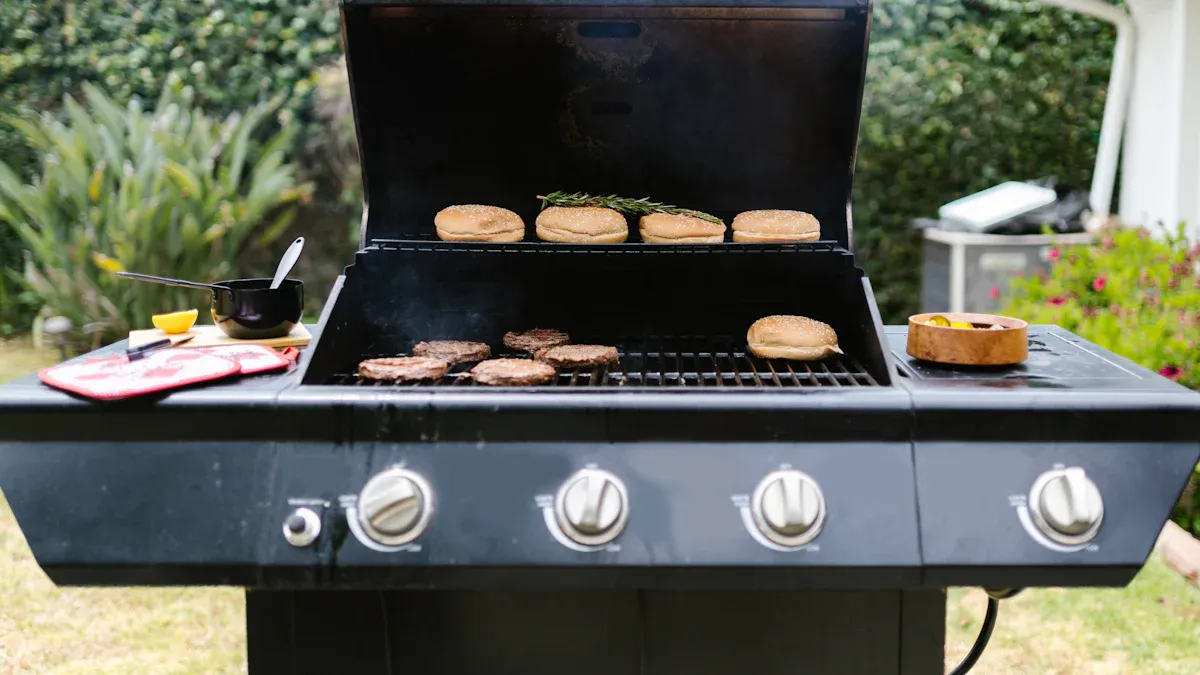
Battery Gas Pules Igniter technology sets a new benchmark for barbecue grills in 2025. Several market trends drive this transformation:
- Consumers seek outdoor cooking appliances for home-based entertainment.
- Urbanization and higher incomes expand the market.
- Regulatory policies favor eco-friendly, efficient grilling.
- Smart systems and advanced ignition improve safety and convenience.
Key Takeaways
- Battery gas pulse igniters provide fast, reliable, and safe ignition for gas grills with just a push of a button, making outdoor cooking easier and more enjoyable.
- These igniters use common AA or AAA batteries to create repeated sparks that work well even in windy or rainy weather, reducing failed starts and wasted fuel.
- Modern grills with battery pulse igniters offer better safety features, lower maintenance, and improved user convenience compared to traditional ignition systems.
What Is a Battery Gas Pulse Igniter?
Definition and Main Function
A battery Gas Pules Igniter represents a modern ignition system designed for gas-powered barbecue grills and other outdoor cooking appliances. This device uses a battery, typically an AA or AAA cell, to generate a series of high-voltage electrical pulses. These pulses create sparks that ignite the gas burner quickly and reliably.
The main function of this igniter centers on providing a safe, efficient, and user-friendly way to light gas burners. Unlike traditional piezoelectric igniters, which rely on mechanical force, the battery Gas Pules Igniter operates electronically. Users simply press a push button, and the system delivers repetitive spark pulses until the gas ignites. This approach ensures consistent ignition, even in challenging weather conditions.
Tip: The battery Gas Pules Igniter works with a wide range of gases, including natural gas, propane, and mixed gas blends. Its versatility makes it suitable for both household and commercial grilling environments.
Key functions include:
- Generating sparks to ignite various gases (natural, manufactured, propane, LP gas-air mixtures)
- Supporting safe and efficient ignition for grills, stoves, fireplaces, and fire pits
- Operating reliably across a broad temperature range, from -20℃ to 85℃
- Providing heat resistance and safety features for outdoor use
Core Components and Design
Manufacturers design the battery Gas Pules Igniter with several essential components that work together to deliver reliable performance. Each part plays a specific role in the ignition process.
| Component | Description/Specification |
|---|---|
| Spark Generator | Universal spark generator for BBQ gas grills |
| Battery Type | 1.5-Volt AA or AAA battery (not included) |
| Button Material | Durable plastic push button |
| Mounting Hole | 7/8″ diameter for easy installation |
| Outlets | Two output terminals for multiple burners |
| Additional Parts | Steel springs in replacement caps |
The spark generator forms the heart of the system. It receives power from the battery and converts it into high-voltage pulses. The push button, made from robust plastic, allows users to activate the igniter with minimal effort. The mounting hole ensures straightforward installation on most grill models. Two output terminals enable the device to ignite more than one burner at a time, increasing convenience for users who operate multi-burner grills.
Manufacturers also incorporate safety and durability features. Black epoxy filling protects internal components from heat and moisture, while the system’s heat resistance ensures reliable operation in outdoor environments. The design supports easy installation and minimal maintenance, making it accessible for both new and experienced grill owners.
How a Battery Gas Pulse Igniter Works

Pulse Ignition Mechanism
The pulse ignition mechanism in modern barbecue grills relies on advanced electrical engineering. Unlike traditional piezo ignition, which uses the piezoelectric effect to generate a spark through mechanical force, the pulse ignition system operates electronically. The core principle involves converting a low direct current (DC) voltage from a battery into a high-voltage pulse using a transformer or booster module. This process draws on Tesla coil principles, allowing the module to produce a strong, continuous discharge.
When a user presses the ignition button, the system sends a series of high-frequency, nanosecond-pulsed discharges. These pulses distribute energy over multiple short bursts rather than a single spark. This method enhances ignition efficiency by directing more energy into the chemical reactions needed to ignite the gas. The repetitive pulses also allow precise control over energy timing, increasing the volume of gas exposed to the discharge and enabling larger ignition kernel growth. As a result, the system achieves faster and more reliable ignition, even under challenging conditions such as wind or lean fuel mixtures.
Note: High pulse repetition frequency (PRF) broadens the ignition envelope, allowing the igniter to work with a wider range of gas mixtures and environmental conditions.
Battery Power and Operation
Battery power serves as the foundation for the operation of a gas pulse igniter. Most models use a single AA or AAA battery, which supplies a 1.5-volt DC current to the ignition module. This setup eliminates the need for external power sources, making the system portable and easy to use. The battery powers the electronic components that generate the high-voltage spark, enabling push-button or even remote-triggered ignition.
Manufacturers favor AA and AAA batteries because they are widely available and easy to replace. Users can quickly swap out batteries, ensuring uninterrupted performance during outdoor cooking sessions. Proper battery placement is essential for functionality, so users should always check the manual for correct installation. The reliance on common battery types also means that grill owners do not need to search for specialized power sources, adding to the convenience and efficiency of the system.
- AA and AAA batteries are the most common choices for these igniters.
- These batteries provide consistent power for multiple ignition cycles.
- Users should always ensure correct battery orientation for optimal performance.
Step-by-Step Ignition Process
The ignition process in a battery Gas Pules Igniter follows a straightforward sequence. Each step contributes to the system’s reliability and ease of use:
- User presses the ignition button.
- The battery supplies low-voltage DC power to the ignition module.
- The module converts this low voltage into a high-voltage pulse using a transformer.
- The system delivers a series of rapid, high-frequency pulses to the spark electrode.
- The electrode generates visible sparks at the burner.
- The sparks ignite the gas-air mixture, producing a stable flame.
This process repeats as long as the user holds the button, ensuring continuous sparking until ignition occurs. The use of multiple, precisely timed pulses maximizes the probability of successful ignition, even in less-than-ideal conditions. The system’s design also allows for quick recovery and repeated use, making it ideal for both casual grillers and professionals.
Post time: Aug-04-2025